Pages

Showing posts with label juvenile. Show all posts

Tuesday, 20 March 2012

Nanotyrannus, the Tyrannosaur that never was?

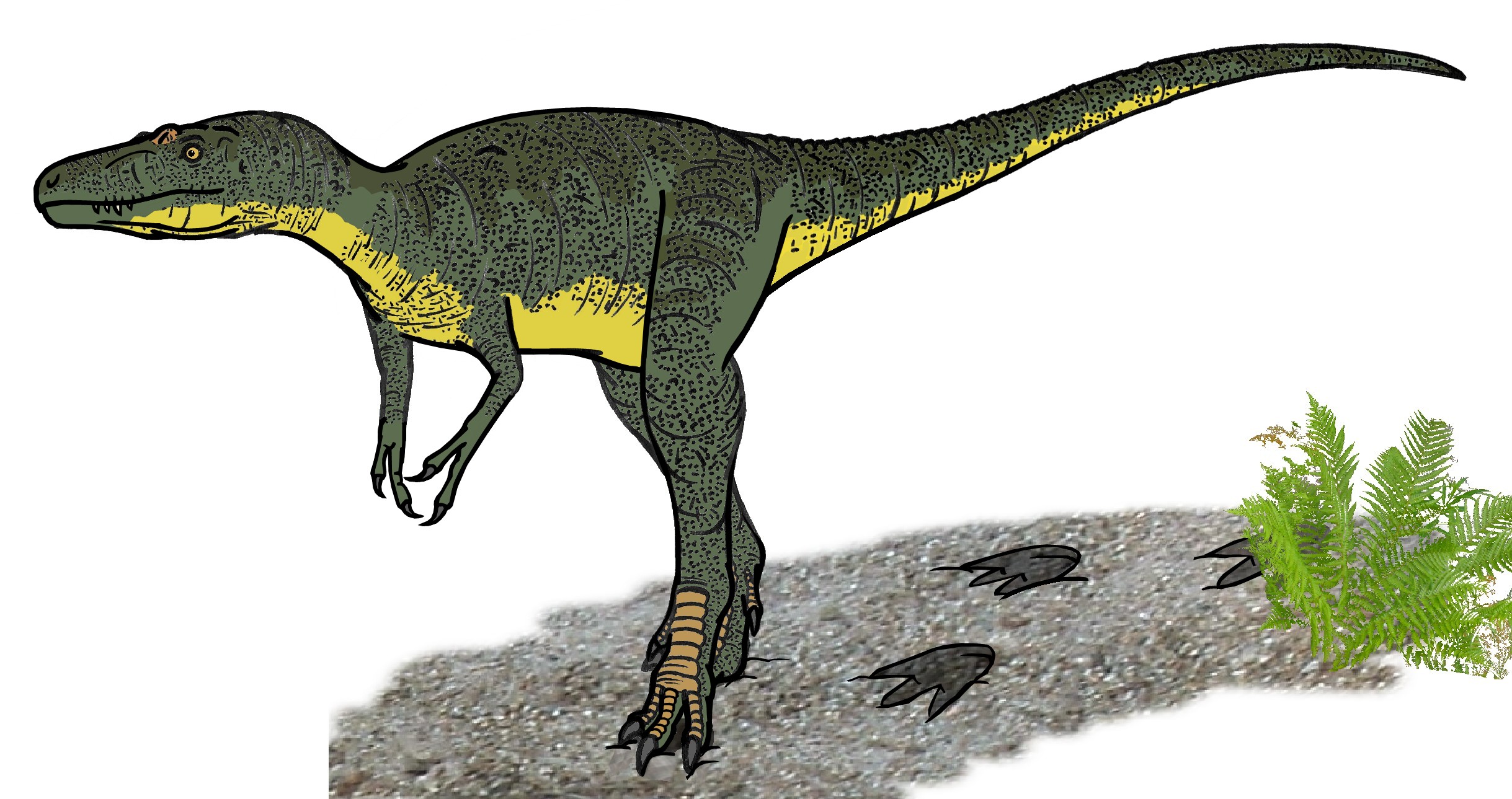
Nanotyrannus was described in 1988 by Robbert Bakker as a species of pygmy Tyrannosaur that lived alongside T. rex in what is now Montana, but it's status as a valid species is currently disputed.
Nanotyrannus life reconstruction (image Conty/Wikipedia)
The skull that formed the basis of Bakker's Nanotyrannus has certainly had an interesting second life as a fossil. When first described in 1946 it was named as a new species of Gorgosaurus, given the specific name lancesis after the Lance Formation in Montana where it was found. Subsequently it was referred to the slightly later Tyrannosaur genus Albertosaurus.
But it's moment glory would come in 1988 when it was given it's own genus by Robbert Bakker who named it Nanotyrannus because of it's small size compared to other Cretaceous Tyrannosaurs. The total length of N. lancensis was estimated to by about 5 meters in total length, less than half the size of a mature T. rex.

The status of Nanotyrannus did not go undisputed however, and the discovery of a second specimen in 2001 seemed to bring an end to the status of Nanotyrannus as separate species.
Monday, 13 February 2012

Tyrannosaurus growth

Dinosaurs grew very large in a relatively short period of time, and their bodies changed as they matured. This happened in T. rex too, but with a twist.

"Jane" a Juvenile Tyrannosaurus (image Wikipedia)
That Dinosaurs could grow to enormous size is common knowledge, but they were surprisingly small when they hatched. Even the largest known Dinosaur egg is no more that 25 by 30 centimetres. No T. rex egg is known, so we don't know exactly how big they were when hatching, but they were probably about the size of a chicken.

The growth pattern of Dinosaurs can be roughly summarized as a number of years of slow growth, followed by rapid growth until maturity and gradual growth until death. Depending on the size of the Dinosaur it could take anywhere from 2 years for the smallest species, to 15 years for the gigantic Sauropods to reach maturity (quite amazing if you consider the size of the largest Sauropods). 
Tyrannosaurus had a surprising twist on this pattern. Much like humans T. rex did not start its fast growth until around twelve years old, and would then grow rapidly until reaching maturity at 18 or 19 years old. Compare that to the basal Tyrannosaurid Guanlong which was found to have been mature at a mere seven years of age.